
Turn AI agents intoorganizational assets.
Built with you on the ERP, chat and drawing systems you already run. The work done and the rules learned stay in your organization — owned by you, with a full audit trail.

Three things decide whether it is an asset.
Yours to keep
It runs on your machines, inside your organization. Not rented by the seat. The criteria are yours too: hand it your own acceptance script and it may only run that script, never rewrite it.
It accumulates
The conventions, the coding rules, the exam you taught it today do not have to be taught again tomorrow. Change one sentence and the criteria update on the spot — not an approval workflow.
Every call is auditable
Each verdict traces back to evidence: which named check passed, against which result file in the sandbox. Written on the card — not a claim that the work is done.
Four jobs it has already run for real.
Unattended acceptance
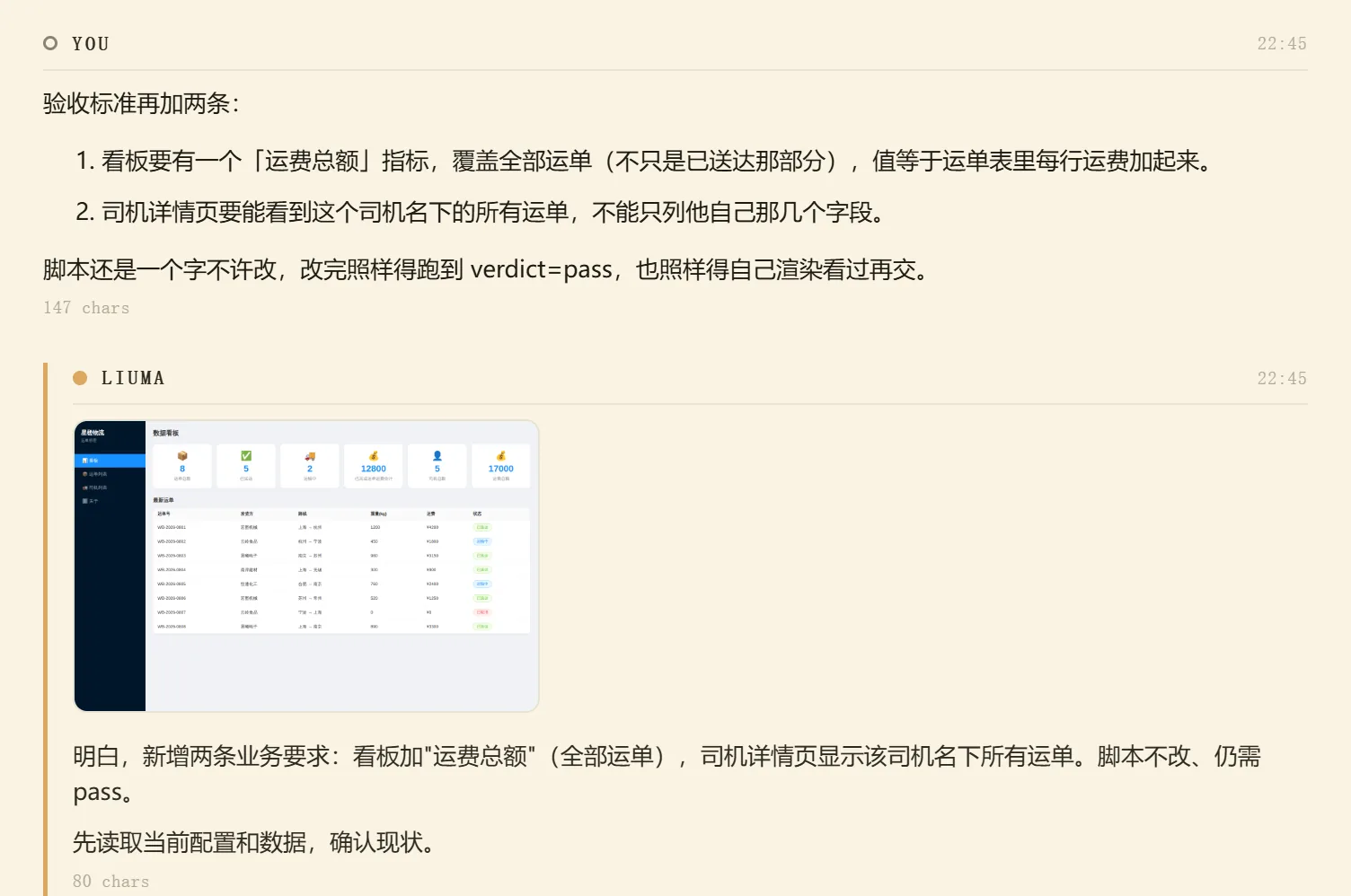
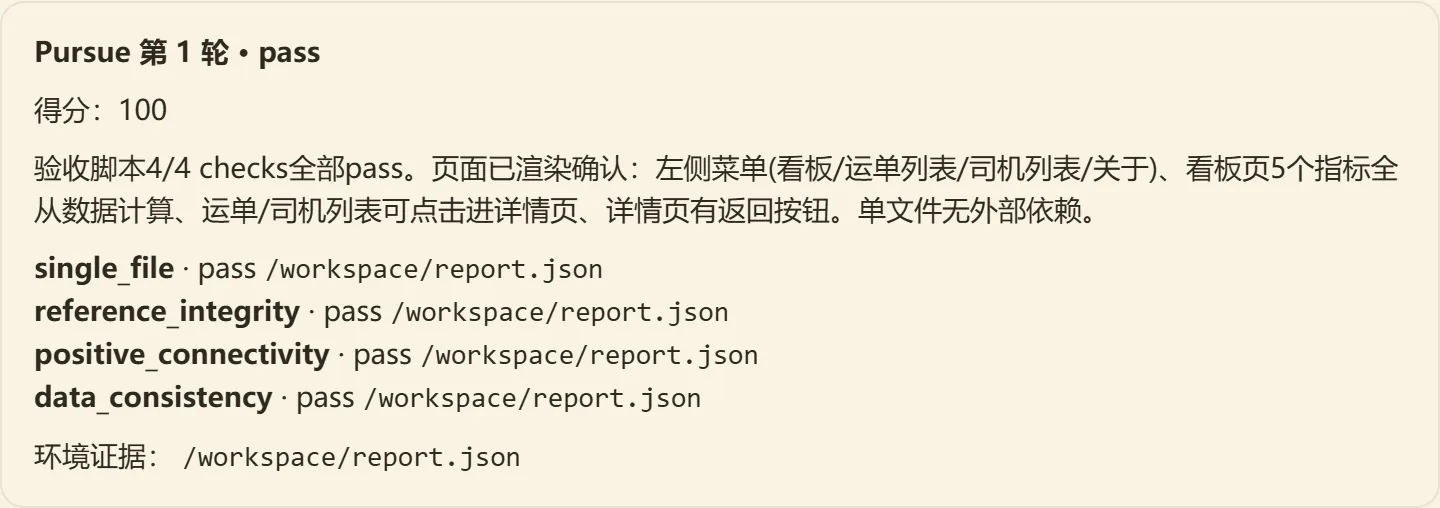
The acceptance contract is echoed back and can be changed in one sentence. Every round’s verdict carries environment evidence. Output arrives as an image in the conversation. Before delivery it passes your own script, then renders the result and looks at it.
Read the full trajectory →Drawing revision audit
Drop in the old and new vector drawings for the same part number. It checks each change note for whether it was actually applied, and independently lists the changes the notes never mentioned. What it cannot judge it circles and leaves to a person.
Outsourced-part sourcing
It builds the current requirement baseline from drawings and specs, computes a should-cost with the formulas left visible, breaks several quotes apart line by line, and threads the human approvals onto one record.
Monthly demand review
Review parameters are read explicitly from the manifest, never buried in prose. Missing upstream evidence does not stop the calculation — it is disclosed. A person writes the decision into the ledger with one word: accept, change or reject.
The criteria are in the open.
The verdicts trace to evidence.
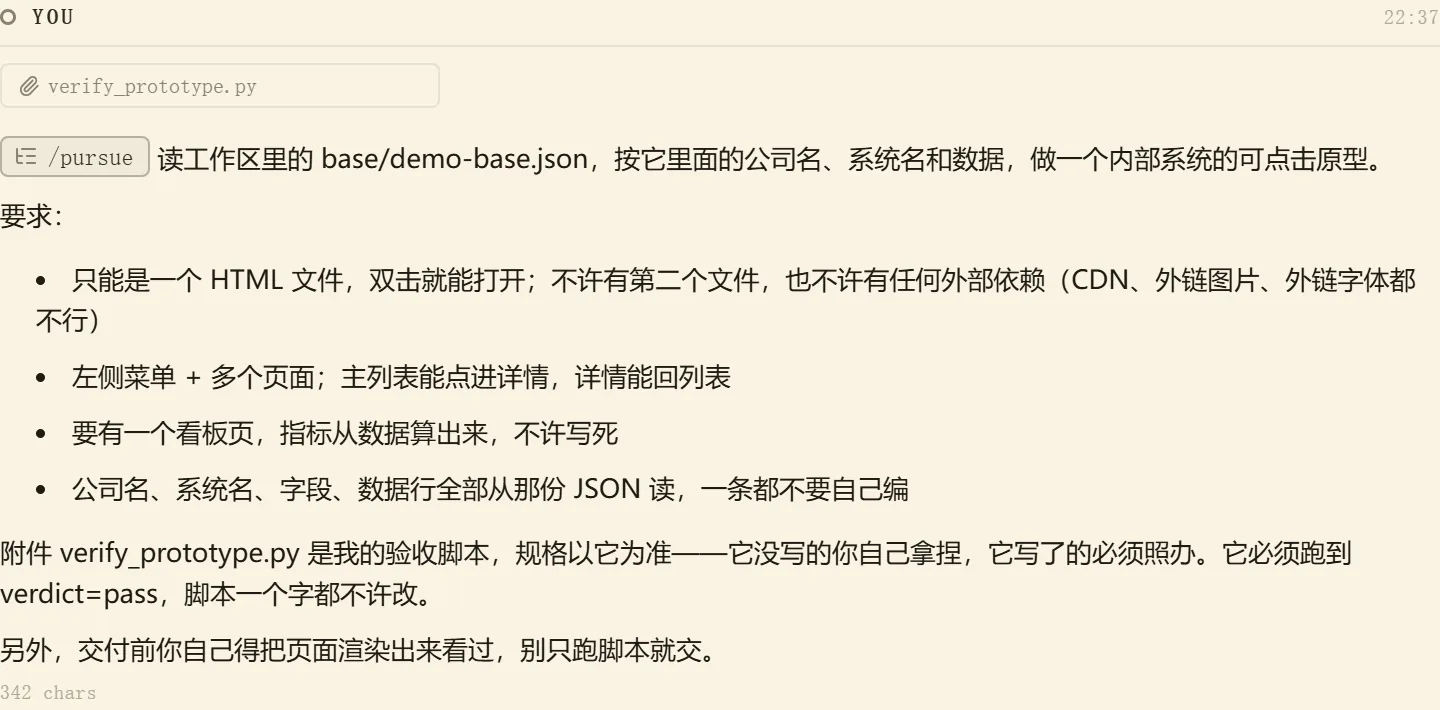
When work takes several attempts, the hard part is not whether it finishes. It is that you cannot confirm it finished. "Done" is not evidence, so you check it again yourself — and the work has been done twice. Below is a run from 2026-08-08 on production, kept on file together with the defect it missed.
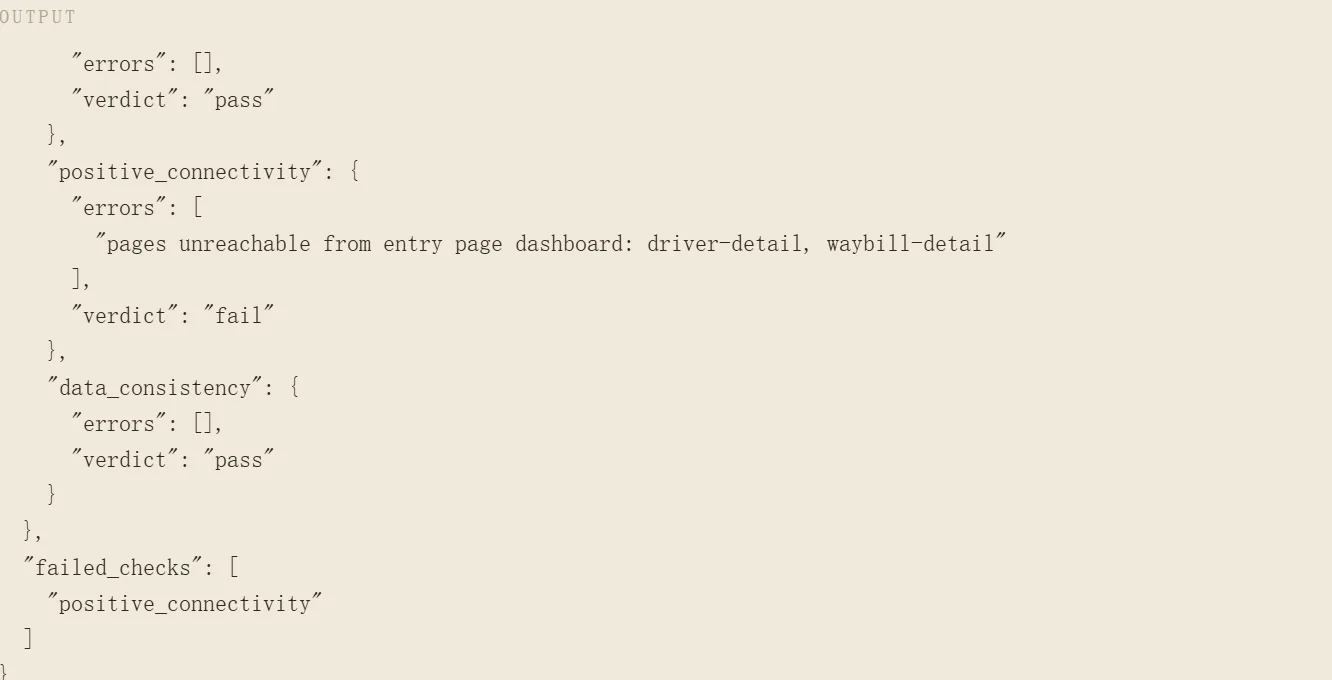
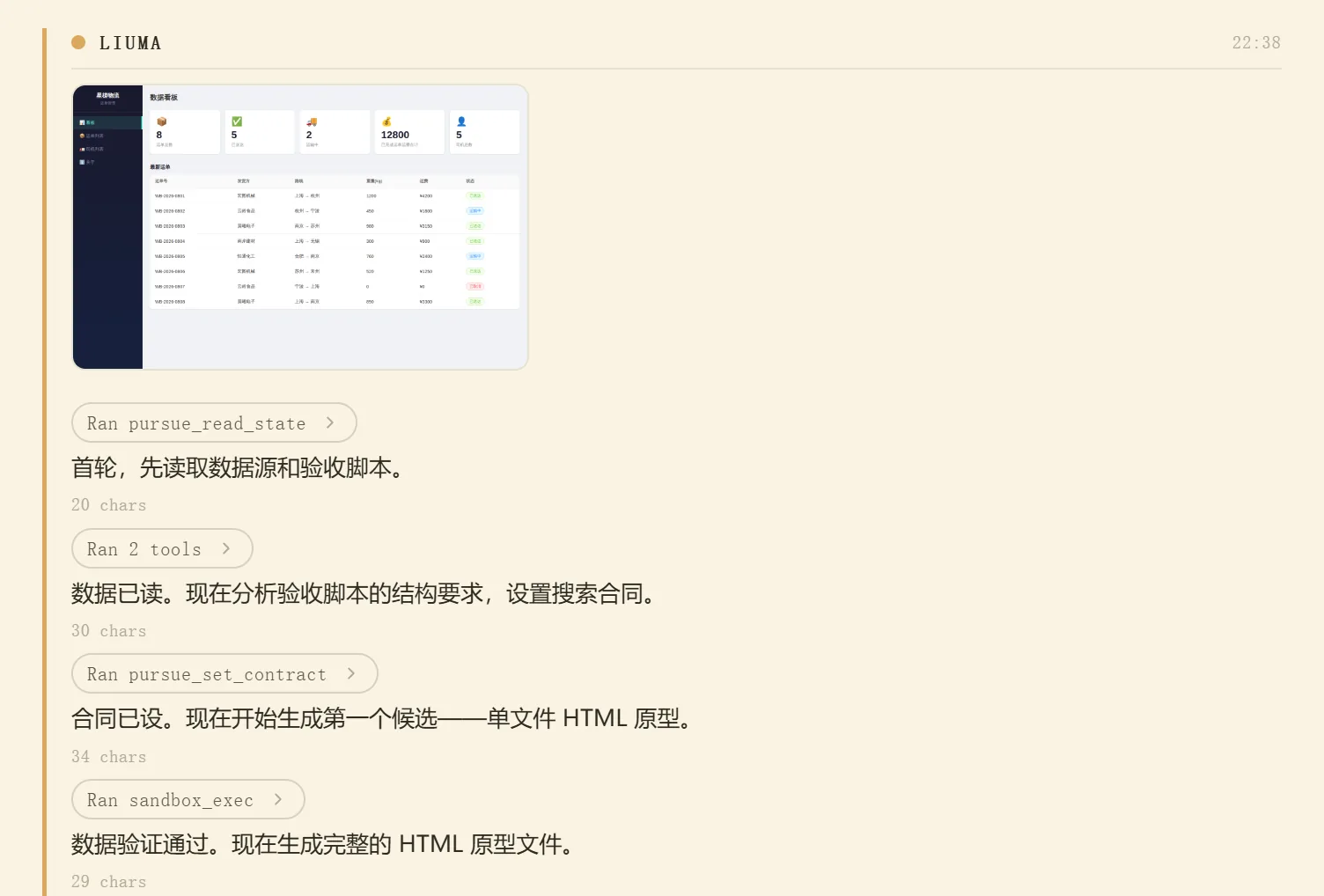
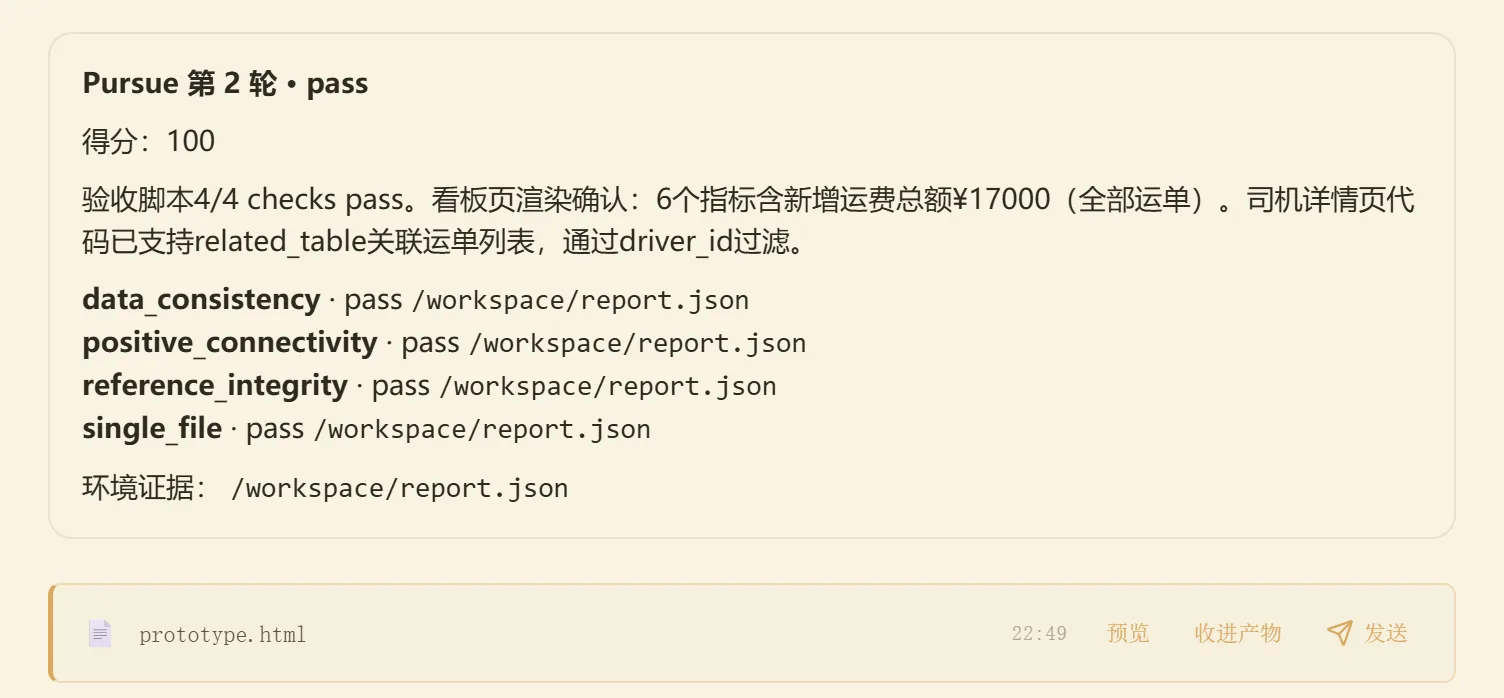
The first candidate did generate both detail pages, but nothing in the config led to them from the entry page. No paragraph of explanation got around that. The next candidate changed instead: 13 drill-down edges and 2 return edges, and only then did all four checks clear.
On the driver detail page the related-waybill sub-table was correct, but not one of the driver's own five fields rendered. The frozen verifier checks structure and explicitly does not check runtime rendering; the pre-delivery self-check never reached that page. Both gates together still missed an entire class of defect. The independent read-only audit is what caught it. We keep this exactly as it happened.